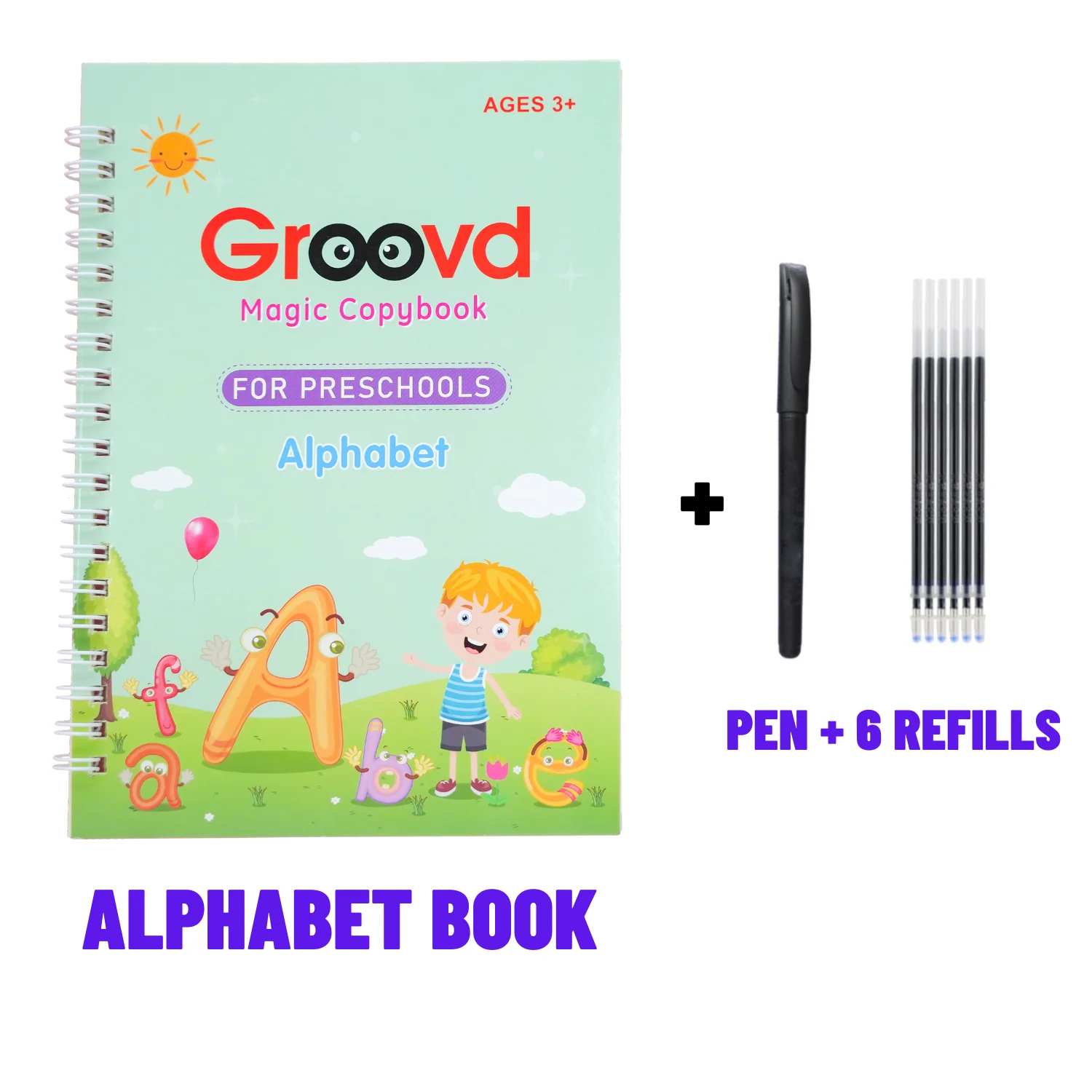
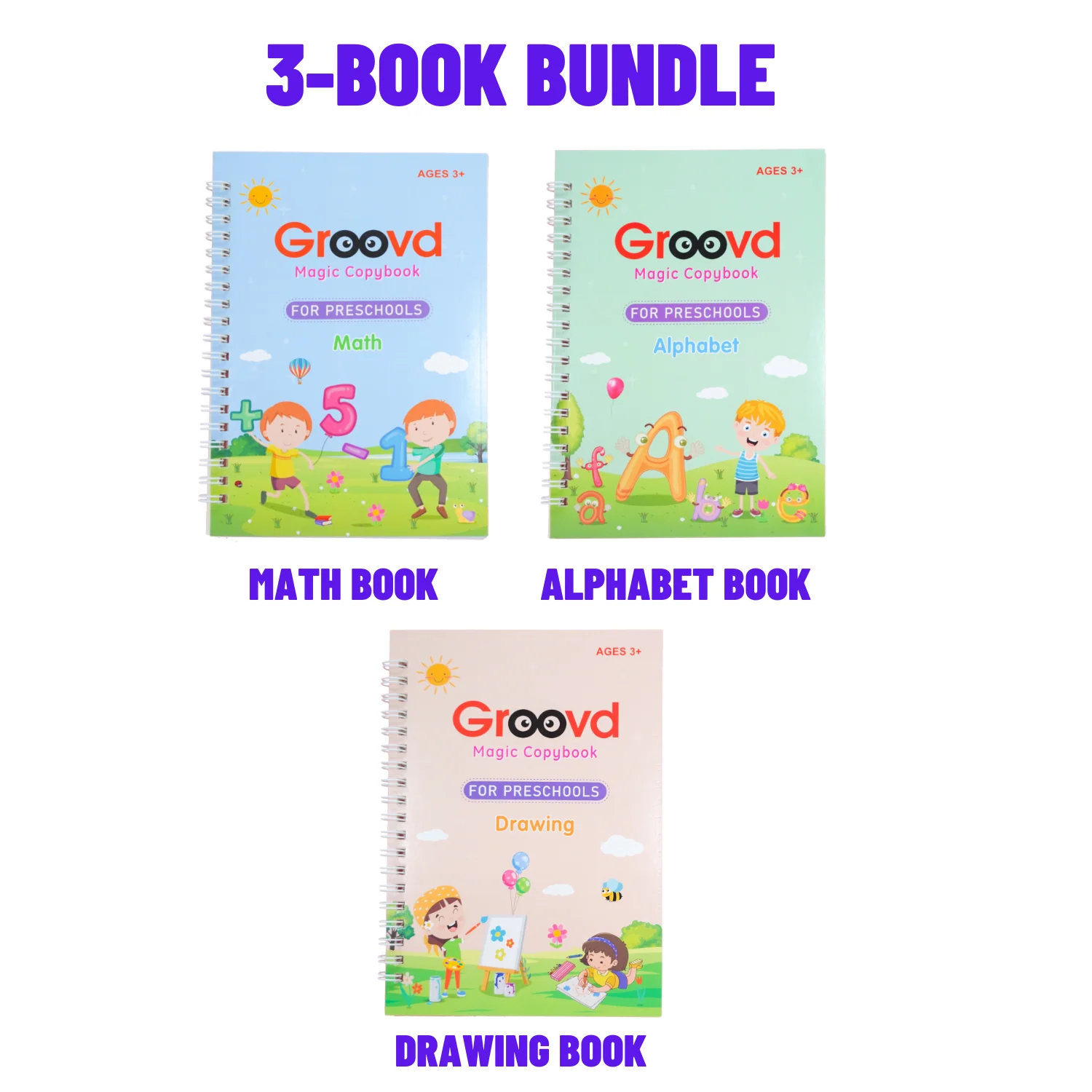
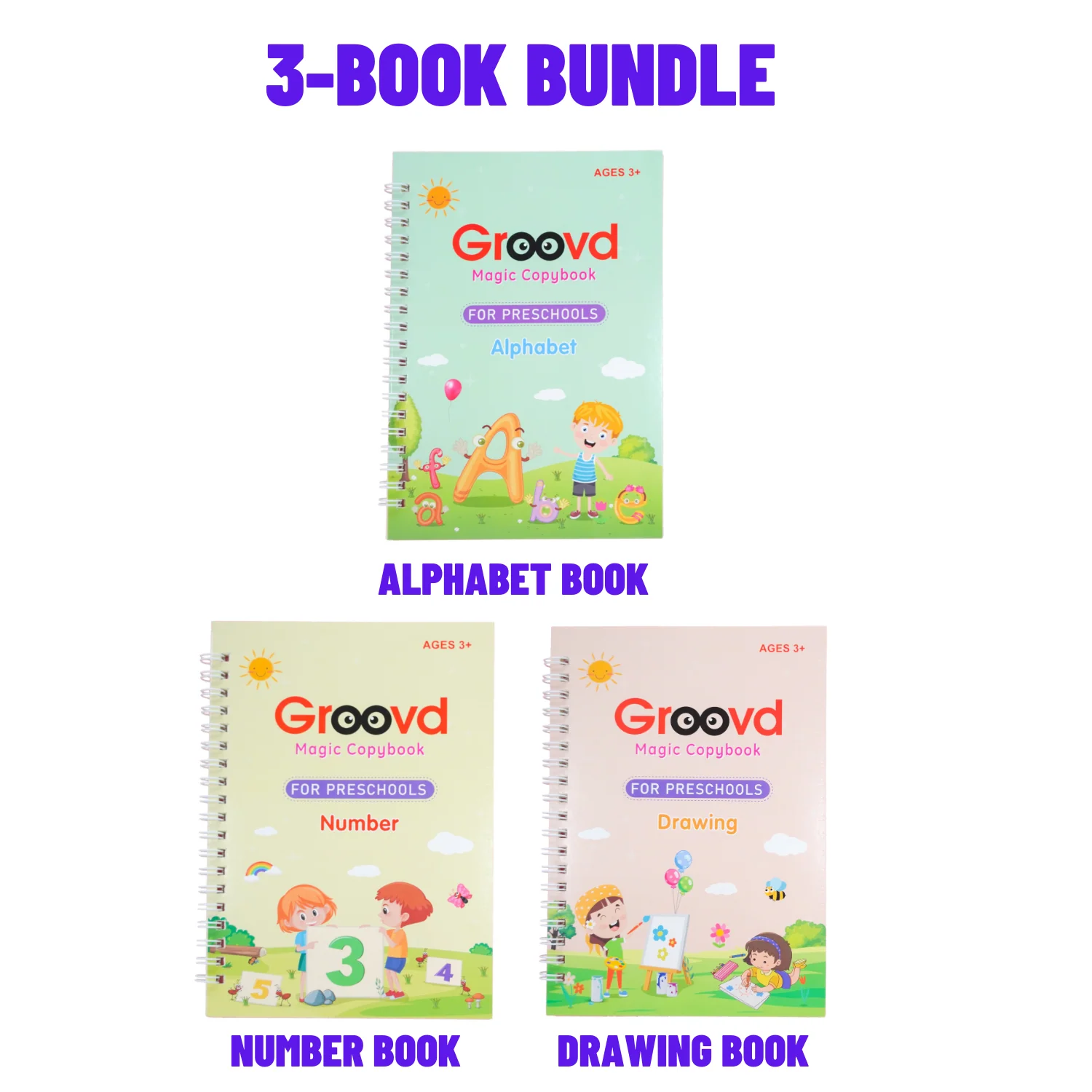
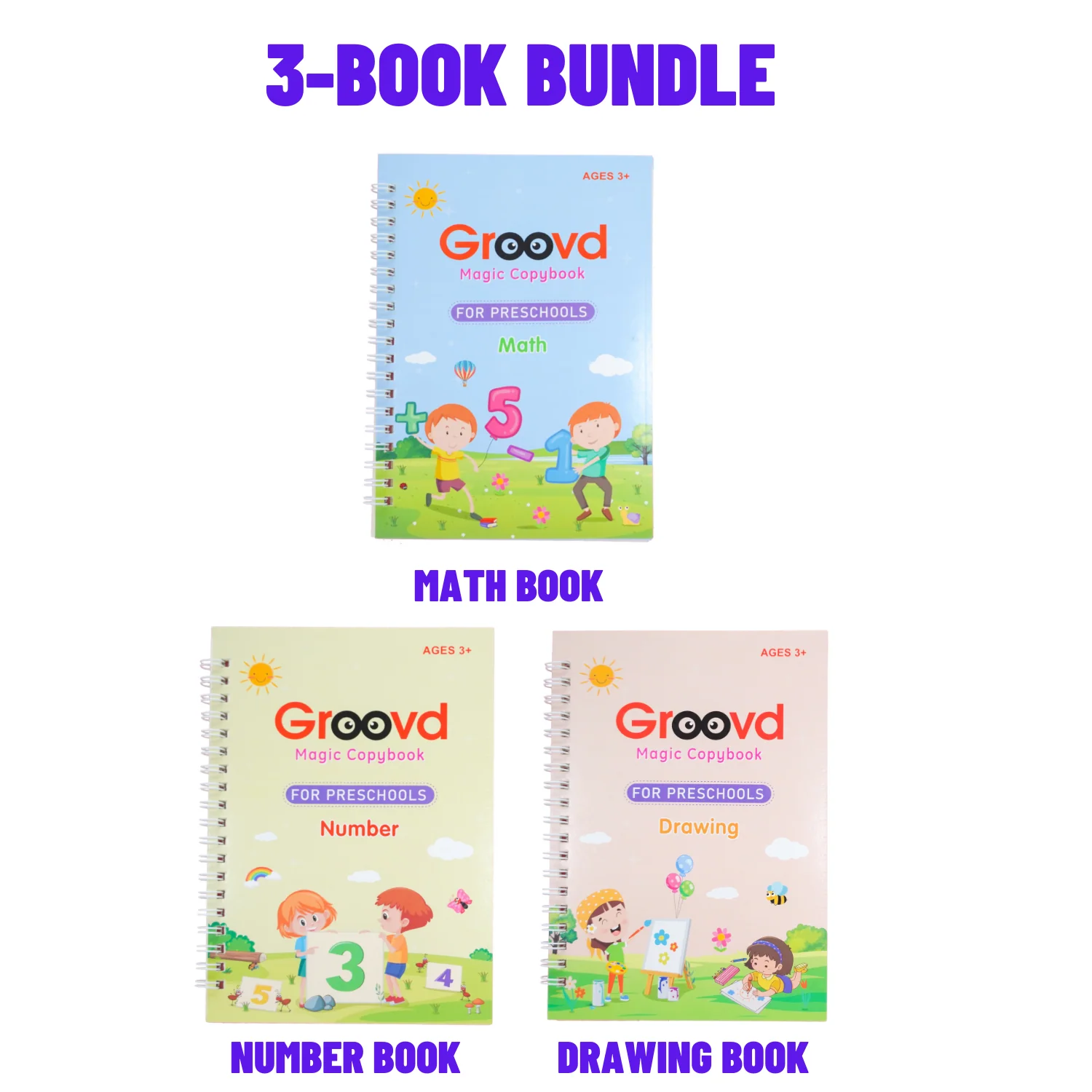
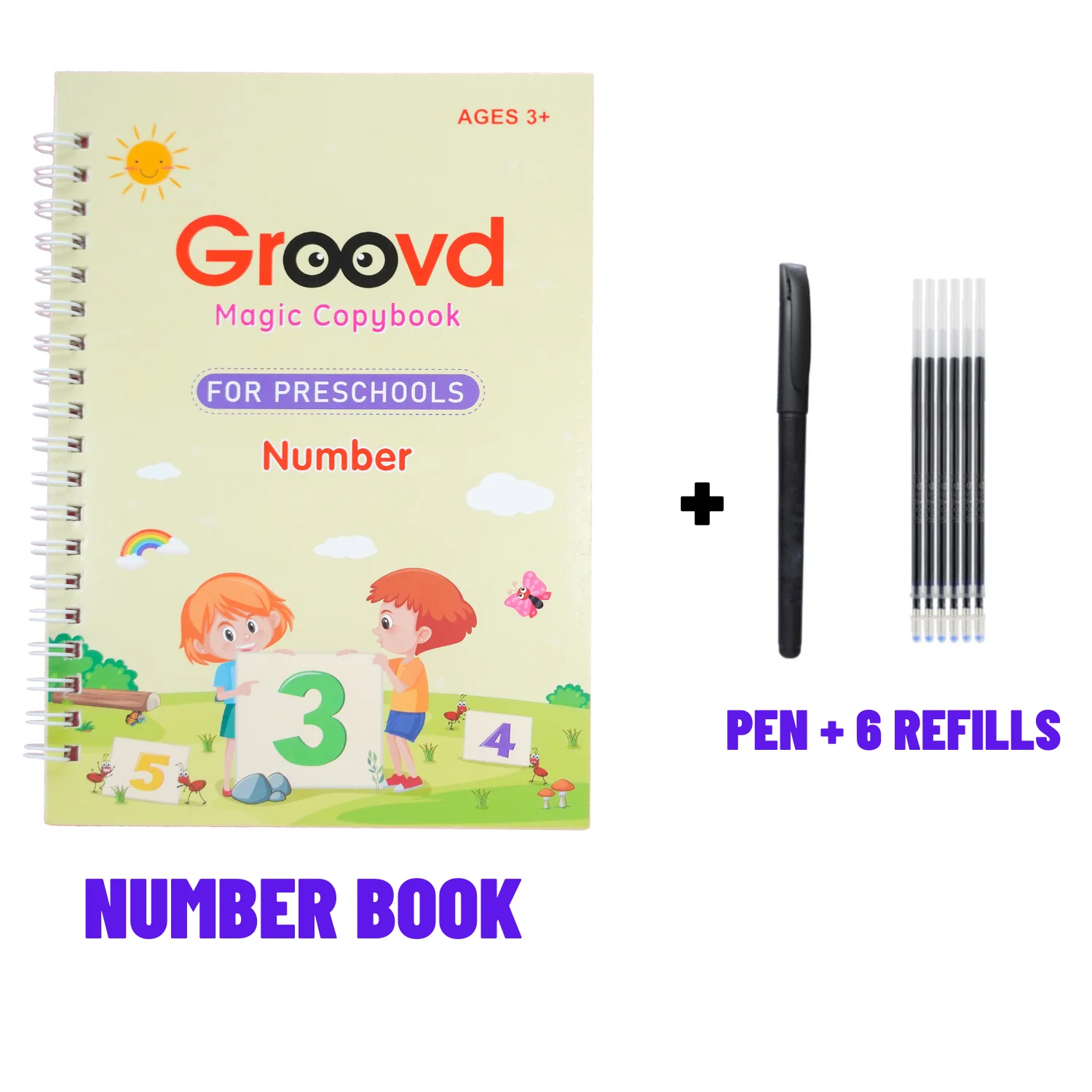
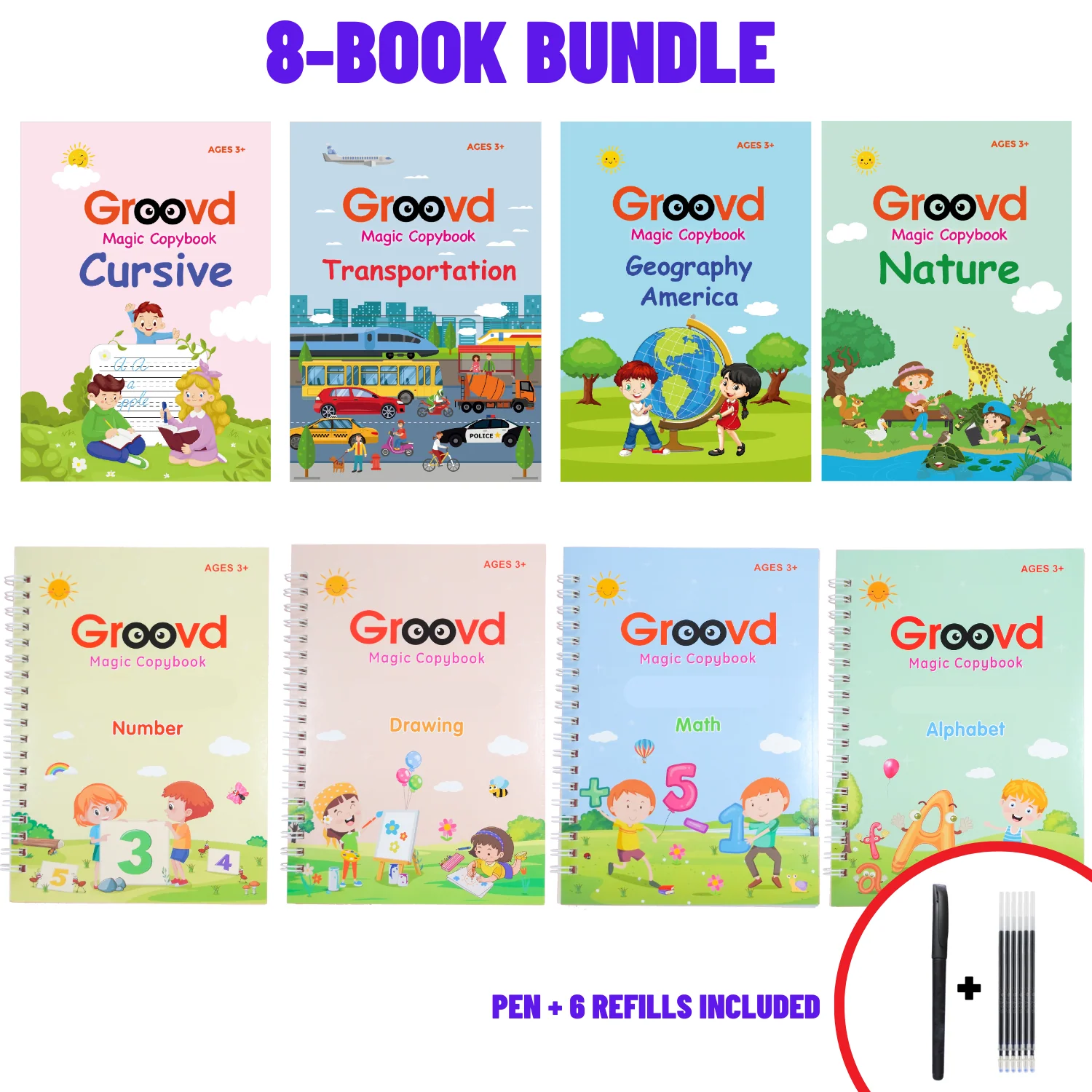
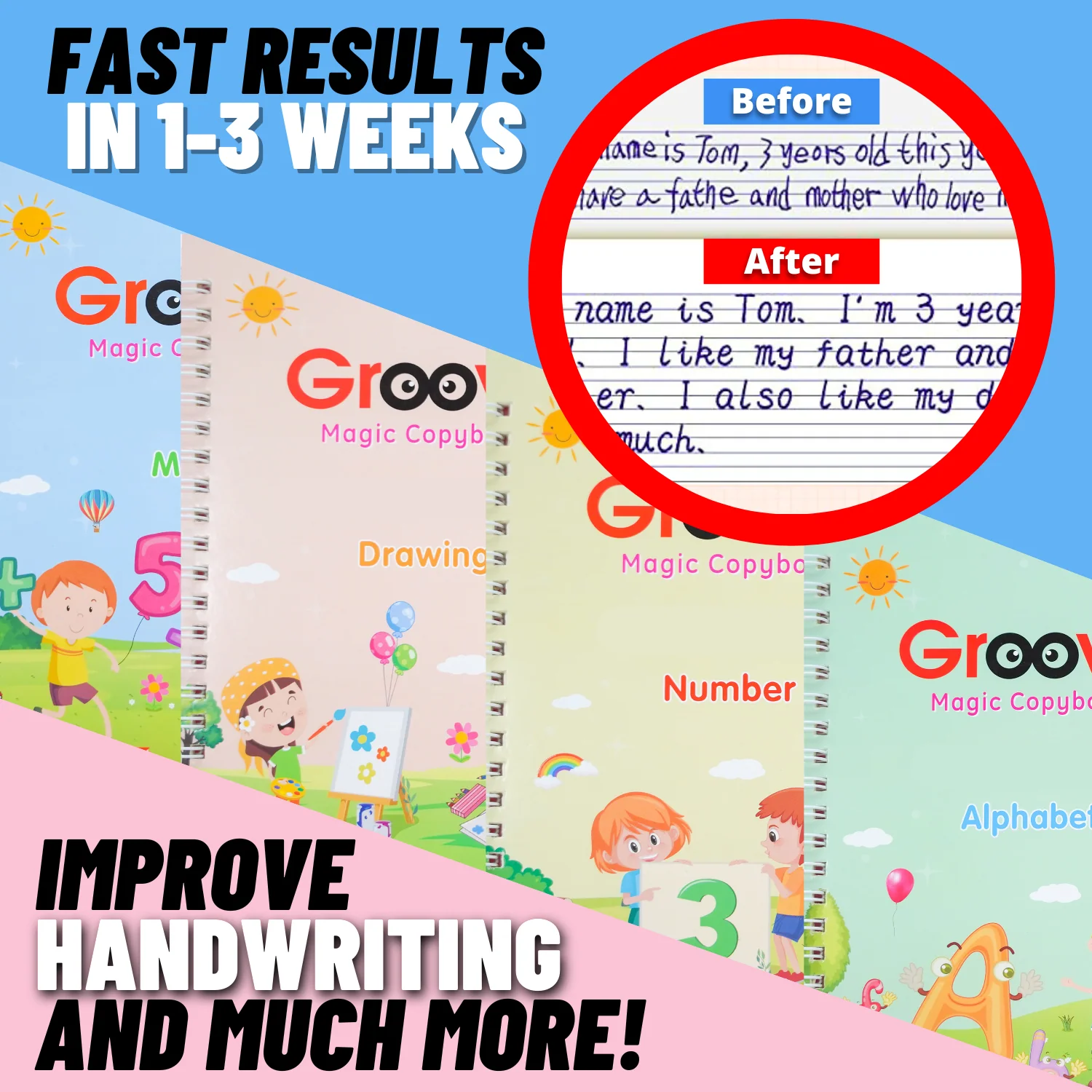
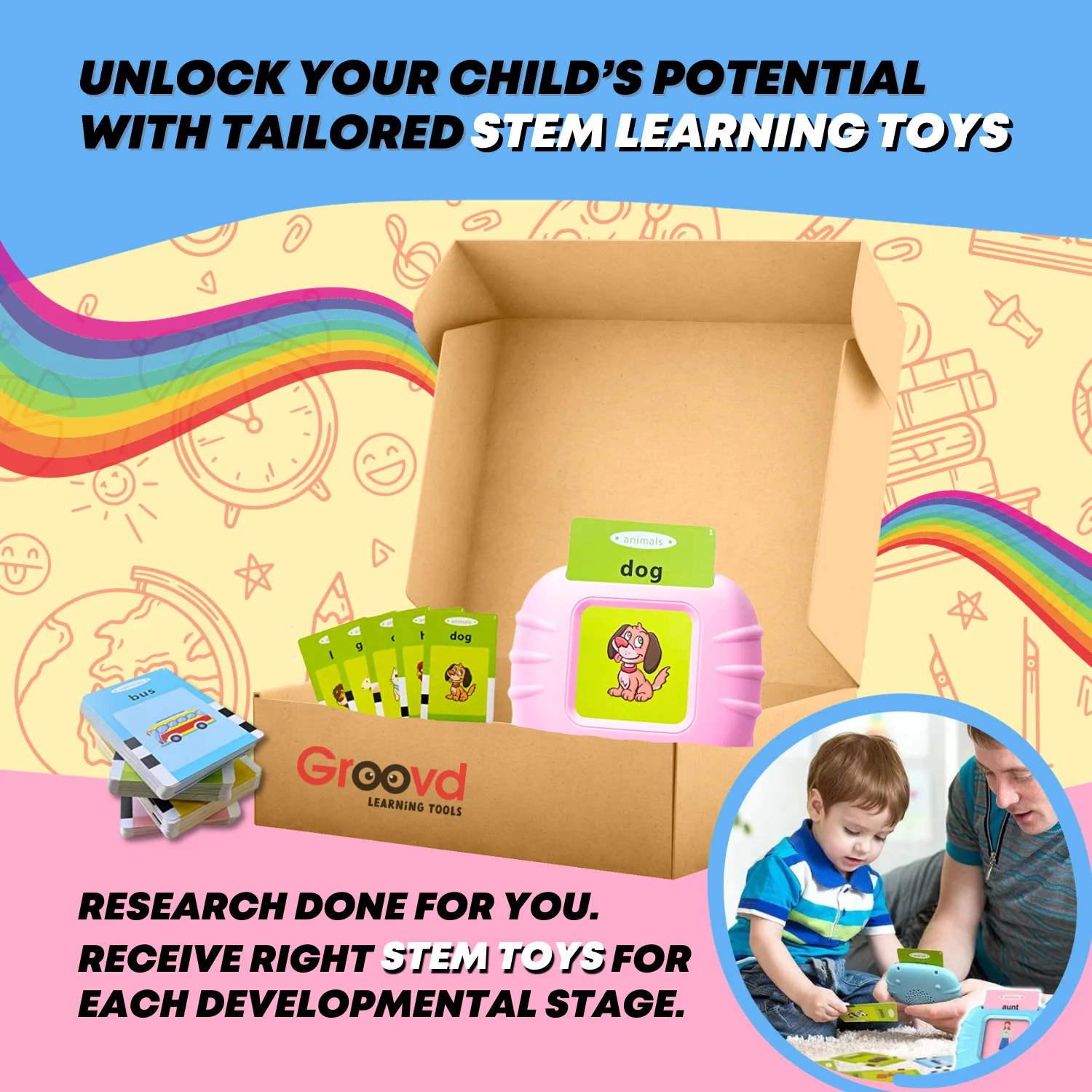
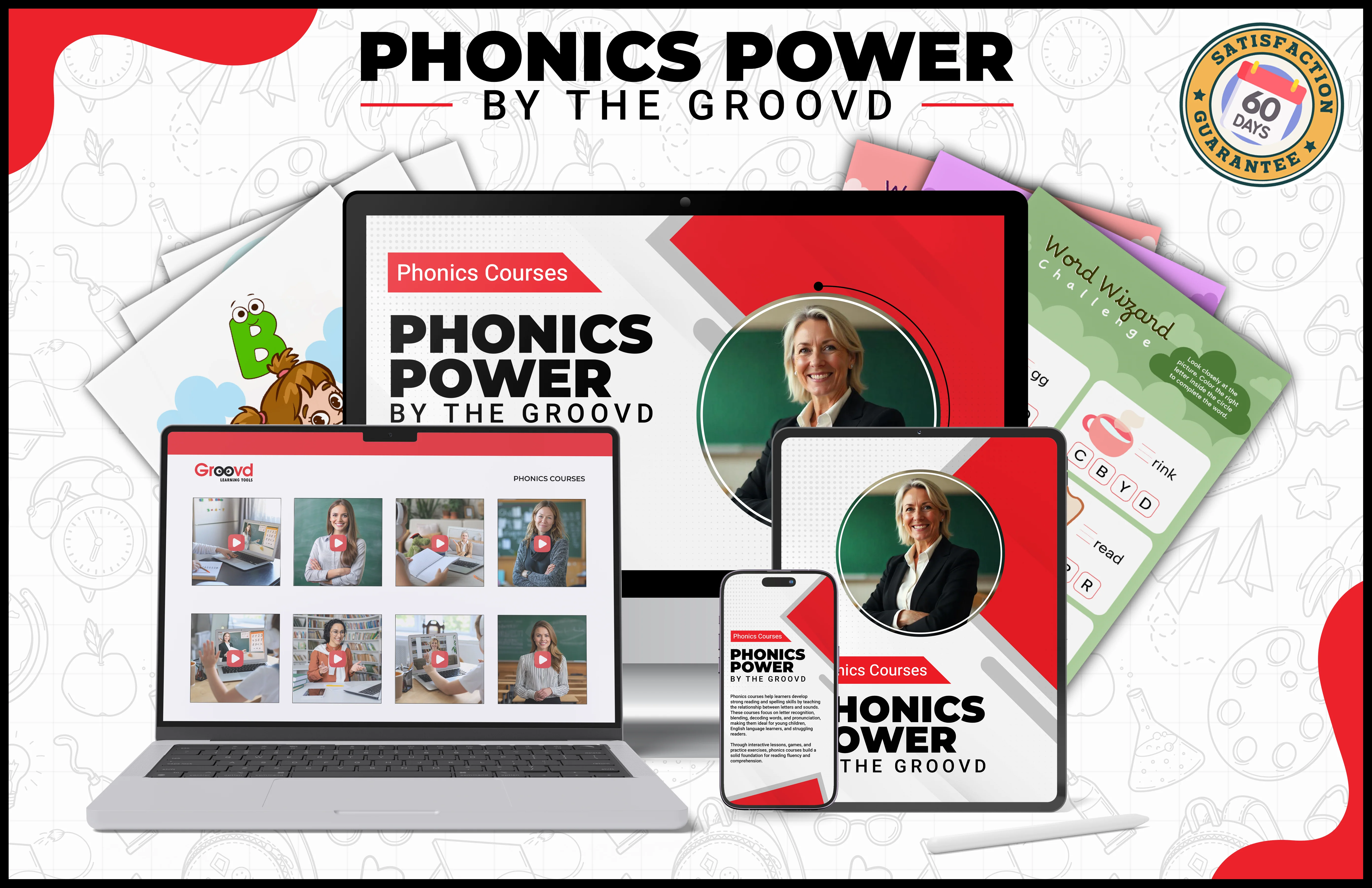
Groovd Phonics Course
🎯 What the course covers
A phonics-course typically teaches the method of how spoken sounds (phonemes) connect with written letters or letter groups (graphemes), enabling learners to decode (read) and encode (spell) words. Reading Rockets+2National Literacy Trust+2
Here are the core elements:
-
Phonemic awareness – recognising and manipulating sounds in spoken words (e.g., hearing that “cat” has three distinct sounds /c/‐/a/‐/t). www2.ashland.edu
-
Letter‐sound correspondence – learning which sound(s) each letter or letter group makes (for example: ‘sh’ → /ʃ/, ‘ai’ → /eɪ/). Jolly Learning+2Reading Rockets+2
-
Blending and segmenting – blending sounds together to read words (d-o-g → “dog”), and segmenting spoken words into sounds to spell them (dog → d-o-g). Jolly Learning+1
-
Systematic and explicit instruction – teaching phonics in a logical progression of sounds and graphemes, with clear, direct steps and regular review. Reading Rockets+1
-
Application to reading and writing – using phonics to decode unfamiliar words, as well as to improve spelling and writing. webteaching.com+1
-
Assessment & toolkits – the course often includes how to assess phonics knowledge (running records, miscue analysis) and how to tailor instruction for learners who may struggle. webteaching.com+1
🧭 Who it’s for & course structure
-
The course may be aimed at early-years educators, parents, or tutors who wish to teach or support reading development via phonics. E.g., one online course had no prior experience required. Alison+1
-
The structure often includes:
-
Module 1: Introduction to phonics theory, letter-sounds, blending/segmenting. New Skills Academy+1
-
Module 2: Practical classroom strategies or home strategies, using phonics in everyday contexts. New Skills Academy+1
-
Module 3: Assessment, differentiation for learners with difficulties (e.g., dyslexia), adapting to ESL/ELL learners. New Skills Academy
-
-
Time & credit: Some courses allocate ~50 hours and may offer university credit units. webteaching.com
-
For younger learners (children) the course might be broken into stages/levels (pre-phonics, synthetic phonics, etc.), with multi-sensory tools (songs, games, animations) to engage. britishcouncil.hk+1
✅ Why it’s important
-
Phonics is backed by research as an effective method for teaching foundational reading skills: knowing the relationship between letters and sounds leads to better decoding and fluent reading. Wikipedia+1
-
For children (and learners of a second language) it provides a structured route into reading and writing, rather than relying purely on memorisation or guessing. National Literacy Trust
-
For teachers & parents: knowing how to teach phonics means you can intervene early when reading difficulties arise (e.g., if a learner is not decoding well).

Description
🎯 What the course covers
A phonics-course typically teaches the method of how spoken sounds (phonemes) connect with written letters or letter groups (graphemes), enabling learners to decode (read) and encode (spell) words. Reading Rockets+2National Literacy Trust+2
Here are the core elements:
-
Phonemic awareness – recognising and manipulating sounds in spoken words (e.g., hearing that “cat” has three distinct sounds /c/‐/a/‐/t). www2.ashland.edu
-
Letter‐sound correspondence – learning which sound(s) each letter or letter group makes (for example: ‘sh’ → /ʃ/, ‘ai’ → /eɪ/). Jolly Learning+2Reading Rockets+2
-
Blending and segmenting – blending sounds together to read words (d-o-g → “dog”), and segmenting spoken words into sounds to spell them (dog → d-o-g). Jolly Learning+1
-
Systematic and explicit instruction – teaching phonics in a logical progression of sounds and graphemes, with clear, direct steps and regular review. Reading Rockets+1
-
Application to reading and writing – using phonics to decode unfamiliar words, as well as to improve spelling and writing. webteaching.com+1
-
Assessment & toolkits – the course often includes how to assess phonics knowledge (running records, miscue analysis) and how to tailor instruction for learners who may struggle. webteaching.com+1
🧭 Who it’s for & course structure
-
The course may be aimed at early-years educators, parents, or tutors who wish to teach or support reading development via phonics. E.g., one online course had no prior experience required. Alison+1
-
The structure often includes:
-
Module 1: Introduction to phonics theory, letter-sounds, blending/segmenting. New Skills Academy+1
-
Module 2: Practical classroom strategies or home strategies, using phonics in everyday contexts. New Skills Academy+1
-
Module 3: Assessment, differentiation for learners with difficulties (e.g., dyslexia), adapting to ESL/ELL learners. New Skills Academy
-
-
Time & credit: Some courses allocate ~50 hours and may offer university credit units. webteaching.com
-
For younger learners (children) the course might be broken into stages/levels (pre-phonics, synthetic phonics, etc.), with multi-sensory tools (songs, games, animations) to engage. britishcouncil.hk+1
✅ Why it’s important
-
Phonics is backed by research as an effective method for teaching foundational reading skills: knowing the relationship between letters and sounds leads to better decoding and fluent reading. Wikipedia+1
-
For children (and learners of a second language) it provides a structured route into reading and writing, rather than relying purely on memorisation or guessing. National Literacy Trust
-
For teachers & parents: knowing how to teach phonics means you can intervene early when reading difficulties arise (e.g., if a learner is not decoding well).